Marketing often feels busiest right before it starts to feel fragile.
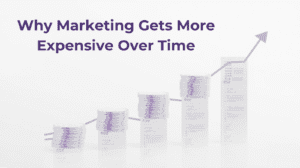
Rising CAC is rarely a channel problem. It’s usually a sign that the work that makes demand easier is happening too late, or not at all.
Teams are posting constantly. Campaigns are running. Dashboards are full. There’s motion everywhere. And yet, acquisition costs creep up, paid media starts carrying more pressure, and every decision feels a bit more loaded than it should.
Nothing looks broken. It just feels harder than it used to.
When that happens, the instinct is to look at channels. To blame platforms. To tweak creative. To optimise targeting. To ask whether organic is “working” or whether paid needs more budget to break through. All reasonable questions. But they tend to orbit the same assumption: that demand begins where we can measure it.
It doesn’t.
By the time someone clicks, most of the work has already happened. Or it hasn’t, and paid ends up doing it instead.
What sits before the click is rarely talked about clearly. Not because it’s mysterious, but because it doesn’t belong neatly to any one team. It’s the slow work of making something recognisable. Of helping people understand what you do, how you’re different, and whether choosing you feels sensible rather than risky. It’s the accumulation of familiarity, not the spike of attention.
This is the part of marketing that doesn’t show up cleanly anywhere. It’s not reach. It’s not engagement. It’s not conversion. And because it’s hard to point to, it often gets treated as secondary. Something that might happen if everyone just keeps doing their jobs well enough.
That’s where things start to get expensive.
When demand isn’t shaped early, paid media ends up doing the work of explanation, reassurance, and persuasion all at once.
When no one is clearly responsible for shaping demand, every channel ends up optimising its own output instead. Organic focuses on staying visible. Paid focuses on driving action. SEO focuses on traffic. Each part works harder in isolation, but nothing is really reducing the effort required to choose.
So paid compensates. It explains more. Repeats more. Persuades more aggressively. Retargets more often. It becomes louder because nothing earlier made the decision feel simpler. It spends more.
This is usually the moment attribution gets pulled into the conversation. And attribution does exactly what it’s meant to do. It shows what happened just before the conversion. The mistake is asking it to explain where demand came from in the first place. Attribution catches the moment of action, not the months of build-up. When teams forget that, they start optimising the end of the journey while quietly starving the beginning (demand creation).
You see the effects in small ways. Ads need more copy. Landing pages need more explanation. Sales conversations take longer. Objections repeat themselves. Nothing ever quite tips over into “easy”. It never shows up as a big win. It just stops being so hard to convert people when this work is done properly.
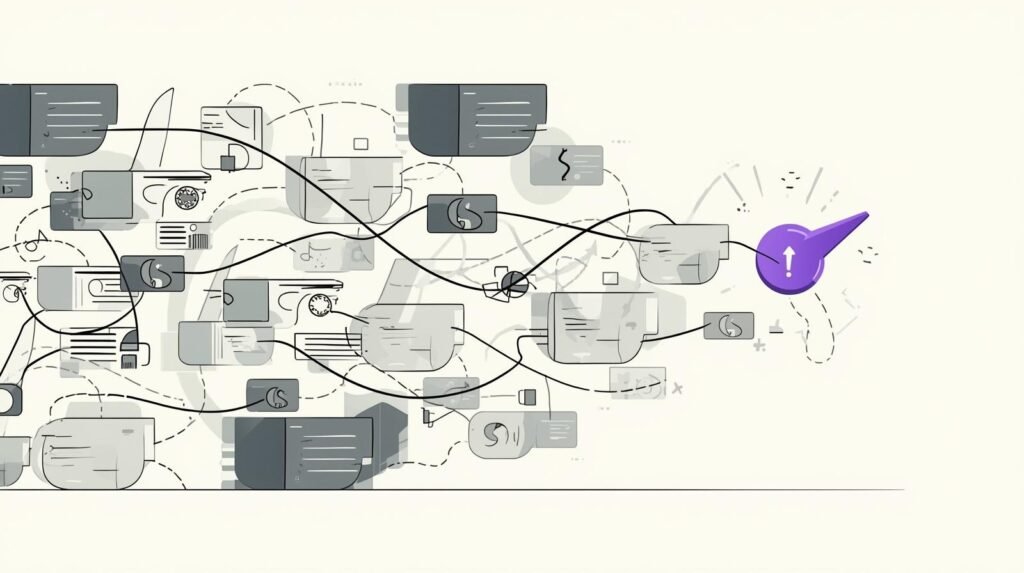
Inside organisations, this creates a strange imbalance. There’s plenty of activity, but very little shared clarity. Teams are busy, but not always aligned. Messages drift slightly from channel to channel. The same questions get answered in different ways. They’re organised around activity, not around how demand really forms. Over time, the cost of that drift lands downstream, where it’s most visible and most expensive.
None of this means channels don’t matter. They do. But channels are surfaces, not systems. Demand doesn’t form in neat hand-offs or platform silos. It forms across time, across touchpoints, and often privately, when someone connects dots you didn’t even know they’d seen.
When that layer is missing, marketing feels like constant effort with very little compounding. When it’s present, things calm down. Paid starts to feel more like a reminder than an introduction. Organic doesn’t need to shout to be useful. Decisions happen with less friction. Costs stabilise not because spend was cut, but because the system stopped fighting itself.
Most teams don’t struggle because they’re doing the wrong things. They struggle because the work that makes demand easier doesn’t sit clearly anywhere. Until it does, CAC will keep rising quietly, no matter how good execution looks on paper.
This is the lens I use when marketing feels expensive in ways dashboards can’t quite explain.
Caroline Thomas helps leadership teams understand why marketing looks busy but underperforms, and how to tell whether it’s learning and compounding to be as efficient as possible.