Most marketing fails to scale because it resets with every campaign instead of compounding over time. The Recall Flywheel is a marketing mechanism designed to build, reinforce, and strengthen customer memory through consistent recall cues. When recall compounds, marketing efficiency increases, acquisition costs fall, and decisions happen faster. This flywheel effect turns marketing from a series of short term bursts into a system that pays off repeatedly. Inside The Profit Recall System™, the Recall Flywheel is the engine that turns attention into sustained commercial advantage.
Why Most Marketing Resets Instead of Scaling
Most marketing is built around campaigns. Launch something. Push it hard. Measure the spike. Move on.
The problem is that campaigns end, and when they end, so does momentum. New messaging replaces old messaging. New angles replace familiar ones. The audience is forced to re-learn who you are every time you show up.
This constant reinvention might look creative, but commercially it is destructive. Memory never gets a chance to form. Familiarity never compounds. Trust has to be re-earned from scratch.
Reset-driven marketing creates activity, not advantage.
What Is the Recall Flywheel?
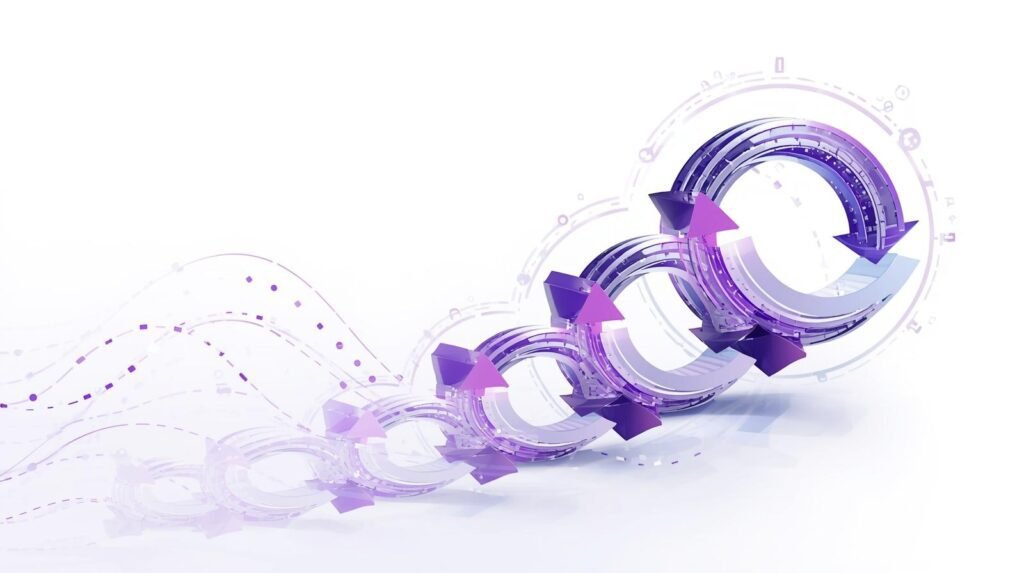
The Recall Flywheel is a compounding marketing mechanism that strengthens customer memory over time by repeatedly reinforcing the same recall cues across channels, touchpoints, and buying moments.
Unlike funnels, which assume linear progress, or campaigns, which are time-bound, a flywheel is continuous. Each interaction builds on the last. Each exposure reinforces what is already known rather than replacing it.
The Recall Flywheel works because it prioritises memory over novelty. Instead of chasing attention repeatedly, it deepens recognition until your business becomes the obvious choice when the moment to buy arrives.
The Role of Recall Cues in Compounding Growth
Recall cues are distinctive signals such as language, beliefs, problems, and patterns that trigger memory of a business at the exact moment a buying decision is made.
Recall is not built through constant variation. It is built through repetition with meaning.
When the same cues show up consistently, in different contexts, over time, the brain does less work to recognise and trust them. Familiarity grows. Confidence grows. Decisions feel easier.
This is why repetition is not boring when it is strategic. It is how memory compounds.
How Customer Memory Reduces Acquisition Costs
Customer memory is the stored mental availability of a business, including what it does, when it is relevant, and why it can be trusted.
When memory exists, buying friction drops. Prospects do not need convincing from scratch. They already know who you are and why you matter.
This is how remembered businesses reduce CAC in real commercial terms. Less paid media is required. Sales cycles shorten. Conversion rates improve. Retention increases.
Marketing becomes more efficient because it is not fighting for attention every time. It is reinforcing what already exists.
How the Recall Flywheel Fits Into The Profit Recall System™
The Profit Recall System™ is a commercial framework that turns audience recall into measurable profit by improving marketing efficiency, reducing acquisition costs, and increasing lifetime value.
Within the system, the Recall Flywheel is the compounding layer. It comes after buying moments are identified, recall cues are defined, and the efficiency spine is in place.
This is where marketing stops behaving like a cost centre and starts acting like an asset. Each output strengthens the next. Each touchpoint reinforces the same memory.
That is how scale happens.
From Campaign Thinking to Compounding Marketing
Campaigns create spikes. Systems create momentum.
Campaign thinking rewards novelty and speed. Compounding systems reward consistency and recall. One burns out teams. The other builds leverage.
When marketing is designed as a flywheel, effort stacks instead of scattering. Content does not expire. Messages do not vanish. Memory carries forward.
This is why systems outperform bursts of activity, especially over time.
Ready to See What’s Compounding In Your Business?
If your marketing feels busy but fragile, the problem usually isn’t effort.
It’s that nothing is compounding.
The Recall Monetisation Diagnostic shows you:
Where recall is already forming in your marketing
Where momentum is resetting instead of stacking
Which recall cues are doing commercial work and which ones are invisible
What to fix first to reduce acquisition costs and improve efficiency
It’s the fastest way to see whether you’re building a flywheel or burning energy on campaigns.
Marketing that compounds — because being remembered is what turns attention into revenue.